Blast hole drilling for quarries: holes, benches and rigs
Production drilling is a rhythm business: the rig has to put straight holes in the pattern, at the rate the blasting schedule consumes them. This is the drilling side of that system.
Start from the bench
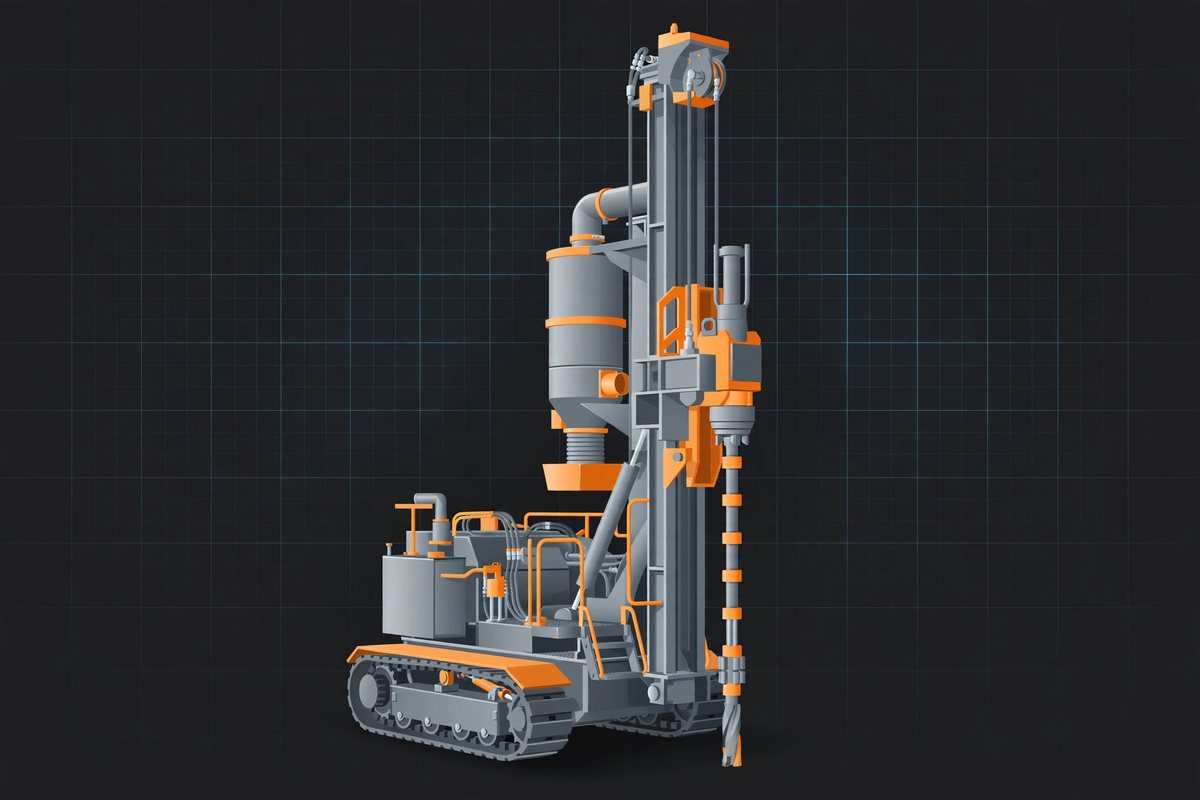
Bench height sets hole depth. Common quarry benches run about 20–40 ft (6–12 m); holes are drilled to bench depth plus a short subdrill below the floor so the toe breaks cleanly. A rig whose single-pass or multi-pass depth covers your bench with margin is the first filter — for most benches in this range, a 66 ft (20 m) class rig like the BlastMaster B80 has room to spare.
Hole diameter: the 3–5 inch working range
Most quarry and small-mine production drilling happens between 3 and 5 in (76–127 mm). Smaller holes suit short benches and tighter patterns in hard rock; larger holes serve taller benches. The final pattern — burden and spacing — is set by your blaster or engineer from the rock and the product size you need; the drilling point is that hole diameter, depth and straightness must match the design, because the blast can only use the holes it is given.
Straightness is a drilling problem
- Collar carefully: most deviation starts in the first metres, in broken surface rock.
- DTH helps: the hammer at the bit and a stiff string wander less than top-hammer or rotary in hard, fractured ground.
- Check with depth: the deeper the hole, the more a small collar error becomes a toe problem — uneven toes mean uneven burden, poor fragmentation and oversize.
Dust is regulated, not optional
Dry drilling in silica-bearing rock creates respirable dust, and many jurisdictions (including US quarries and mines) require engineering controls — a fitted dust collector or water suppression — rather than respirators alone. Treat the collector as part of the rig specification, not an accessory. Modern compact rigs carry collectors as standard.
Sizing the rig to the schedule
Work backwards from the blasting calendar: tonnes per blast, blasts per month, metres per tonne of pattern. That gives required drilling metres per week; add moves, maintenance and weather. A compact crawler that one operator can tram by remote control often out-produces a bigger rig on small, scattered benches — it spends its hours drilling, not being transported.
Common questions
What hole size do most quarries drill?
Production holes of 3-5 in (76-127 mm) cover most quarry and small-mine benches. The exact size comes from the blast design for your bench height and rock.
Why DTH for blast holes?
In hard rock, the down-the-hole hammer delivers energy at the bit, so penetration stays fast and holes stay straight — both of which the blast design depends on.
Do I need a dust collector?
In silica-bearing rock, effectively yes in many jurisdictions: respirable silica rules expect engineering controls at the drill. A fitted collector is the standard answer.
Related: BlastMaster B80 · why DTH wins in rock · hammers and bits
Need a quote?
Tell us the job and the location. We quote equipment and shipping together.