Portable core drilling for mineral exploration
The best target in the district is useless if a rig cannot reach it. Portable core drills exist for the ground trucks cannot serve — and they run real exploration programs, not just sampling.
Why portable at all
Exploration happens where the geology is interesting, which is rarely beside a road. A truck rig needs a road, a pad and a water truck; a portable rig needs a trail and a crew. For first-pass testing of soil and trench anomalies, portability is not a compromise — it is what makes the program possible at all.
The economics follow: several portable holes testing a target cost less than one road built to it, and if the target fails, you walk away instead of reclaiming a road.
How wireline coring works
In wireline coring, the core barrel latches inside the bottom of the rod string. When the barrel is full, a wireline winch lowers an overshot, pulls the barrel up through the rods, and the core is emptied at surface — the rods themselves stay in the hole. Compared with conventional coring, where the whole string is tripped for every run, wireline saves most of the trip time and keeps the hole stable.
Sizing the program
- First-pass holes: shallow (about 25 m class), testing whether mineralization continues below surface showings — the TerroCore ZY-25 class, carried as a roughly 40 kg kit.
- Follow-up holes: deeper and larger core (40 m class) on targets that passed the first pass — modular wireline rigs like the TerroCore ZY-40.
- Core diameter: small-diameter core (Φ16–32 mm in these classes) suits geochemistry and structure logging; assays that need more material argue for larger rigs and road access.
Be honest about depth: portable rigs are shallow-program tools. Deep definition drilling still belongs to full-size diamond rigs.
The kit around the rig
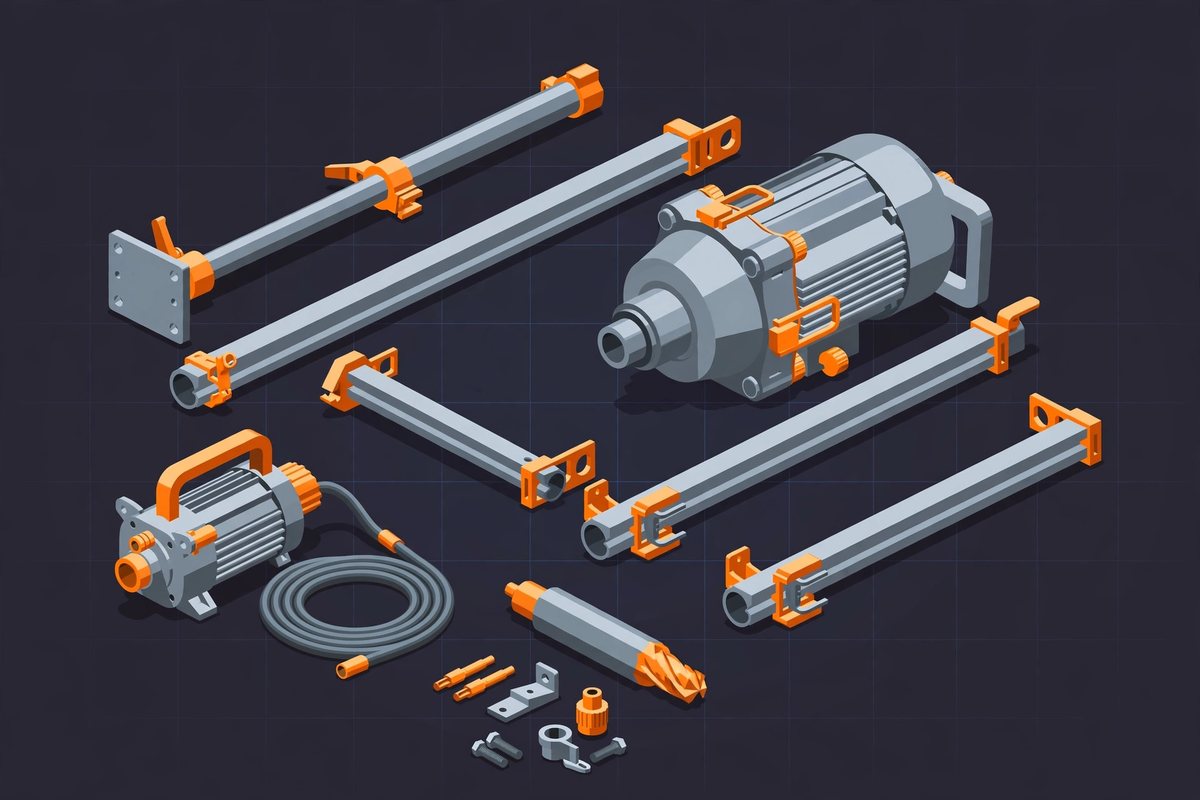
Budget the program, not just the drill: rods and core barrels for your planned metres, bits matched to the rock (impregnated diamond for hard formations), a water pump and hose for sites above the creek, fuel, core boxes and trays, and spares for the parts that wear — a remote camp cannot wait on a courier.
Common questions
How deep can a portable core drill go?
The portable classes run about 25 m (e.g. TerroCore ZY-25) to 40 m (TerroCore ZY-40). That covers first-pass and shallow follow-up programs; deeper drilling needs a full-size rig.
How do the rigs reach site?
They break into man-portable loads and move by pack trail, ATV or helicopter sling load. The heaviest single module is about 40-55 kg depending on the model.
What core sizes do they cut?
Small-diameter core, Φ16-32 mm across these models — suited to geochemical sampling and structural logging.
Related: TerroCore ZY-25 · TerroCore ZY-40 · exploration applications
Need a quote?
Tell us the job and the location. We quote equipment and shipping together.